

The Kingdom of Kings: The Falklands, South Georgia & Antarctica onboard Terra Nova Adventurer
All departures of this tripCRUISE ID # TERRANOVA_0494_FALKSOUTHG_USH_USH_TNA_20280205
Ushuaia TO Ushuaia
The Best of South Georgia, the Falklands & the Antarctic Peninsula
Embark the Terra Nova Adventurer on the ultimate Southern Ocean journey—an expedition that weaves together the windswept beauty of the Falkland Islands, the staggering wildlife spectacle of South Georgia, and the towering icescapes of the Antarctic Peninsula. This is a voyage through the true Kingdom of Kings—where vast colonies of king penguins stretch to the horizon, albatrosses command the skies, and the legacy of polar explorers lingers on every shoreline. With expert guides, immersive landings, and fewer guests aboard, you'll enjoy more time ashore, deeper encounters with wildlife, and a front-row seat to the drama, scale, and wonder of the southernmost continent.
Suites & Fares
Itinerary
- Day 1February 05, 2028
Ushuaia, Argentina
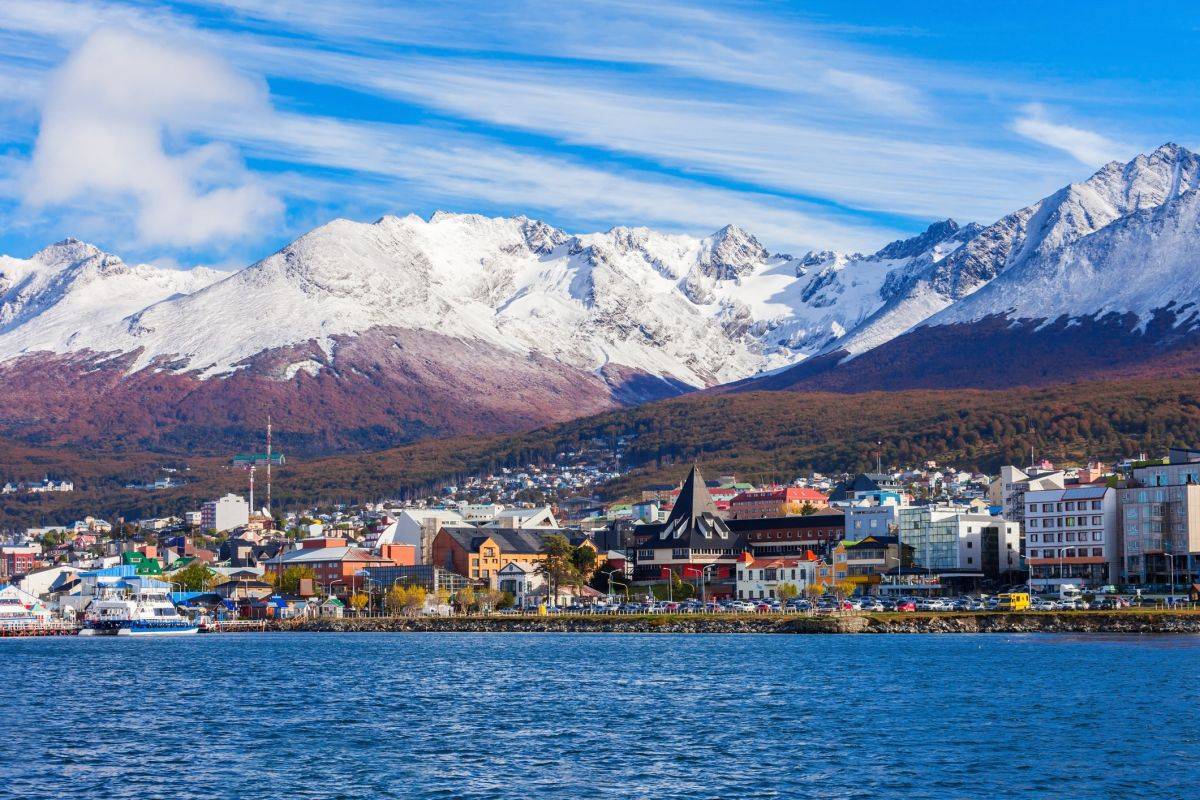
At 55 degrees latitude south, Ushuaia (pronounced oo-swy-ah) is closer to the South Pole than to Argentina's northern border with Bolivia. It is the capital and tourism base for Tierra del Fuego, the island at the southernmost tip of Argentina.Although its stark physical beauty is striking, Tierra del Fuego's historical allure is based more on its mythical past than on rugged reality. The island was inhabited for 6,000 years by Yámana, Haush, Selk'nam, and Alakaluf Indians. But in 1902 Argentina, eager to populate Patagonia to bolster its territorial claims, moved to initiate an Ushuaian penal colony, establishing the permanent settlement of its most southern territories and, by implication, everything in between.When the prison closed in 1947, Ushuaia had a population of about 3,000, made up mainly of former inmates and prison staff. Today the Indians of Darwin's "missing link" theory are long gone—wiped out by diseases brought by settlers and by indifference to their plight—and the 60,000 residents of Ushuaia are hitching their star to tourism.The city rightly (if perhaps too loudly) promotes itself as the southernmost city in the world (Puerto Williams, a few miles south on the Chilean side of the Beagle Channel, is a small town). You can make your way to the tourism office to get your clichéd, but oh-so-necessary, "Southernmost City in the World" passport stamp. Ushuaia feels like a frontier boomtown, at heart still a rugged, weather-beaten fishing village, but exhibiting the frayed edges of a city that quadrupled in size in the '70s and '80s and just keeps growing. Unpaved portions of Ruta 3, the last stretch of the Pan-American Highway, which connects Alaska to Tierra del Fuego, are finally being paved. The summer months (December through March) draw more than 120,000 visitors, and dozens of cruise ships. The city is trying to extend those visits with events like March's Marathon at the End of the World and by increasing the gamut of winter activities buoyed by the excellent snow conditions.A terrific trail winds through the town up to the Martial Glacier, where a ski lift can help cut down a steep kilometer of your journey. The chaotic and contradictory urban landscape includes a handful of luxury hotels amid the concrete of public housing projects. Scores of "sled houses" (wooden shacks) sit precariously on upright piers, ready for speedy displacement to a different site. But there are also many small, picturesque homes with tiny, carefully tended gardens. Many of the newer homes are built in a Swiss-chalet style, reinforcing the idea that this is a town into which tourism has breathed new life. At the same time, the weather-worn pastel colors that dominate the town's landscape remind you that Ushuaia was once just a tiny fishing village, snuggled at the end of the Earth.As you stand on the banks of the Canal Beagle (Beagle Channel) near Ushuaia, the spirit of the farthest corner of the world takes hold. What stands out is the light: at sundown the landscape is cast in a subdued, sensual tone; everything feels closer, softer, and more human in dimension despite the vastness of the setting. The snowcapped mountains reflect the setting sun back onto a stream rolling into the channel, as nearby peaks echo their image—on a windless day—in the still waters.Above the city rise the last mountains of the Andean Cordillera, and just south and west of Ushuaia they finally vanish into the often-stormy sea. Snow whitens the peaks well into summer. Nature is the principal attraction here, with trekking, fishing, horseback riding, wildlife spotting, and sailing among the most rewarding activities, especially in the Parque Nacional Tierra del Fuego (Tierra del Fuego National Park).
- Day 2February 06, 2028
At Sea: Settling into Expedition Life
Today we continue east across the South Atlantic towards the Falkland Islands.
This first full day at sea is an opportunity to settle into the rhythm of expedition life and get to know your expedition team.
Our lecture programme begins with introductions to the wildlife, history and environments we hope to encounter over the coming weeks.
Spend time outside too. Albatrosses, petrels and other seabirds may begin accompanying the ship, while whales and other marine mammals are always worth watching for.
- Day 3February 07, 2028
Falkland Islands
Our first expedition experiences take us amongst the remote islands and rugged coastlines of the Falklands.
These islands support an extraordinary variety of wildlife, including several species of penguin, enormous seabird colonies and marine mammals.
We'll explore by Zodiac and on foot, choosing our locations according to the conditions and wildlife activity on the day.
Along the way, our expedition team will introduce the natural and human history of an archipelago shaped by its isolation in the South Atlantic.
- Day 4February 08, 2028
Continuing to Explore
Presentations turn towards the wildlife and history of the archipelago as we prepare for our first expedition landings. Boots, equipment and Zodiacs are readied — tomorrow, the ship becomes our base for exploring ashore.
- Day 5February 09, 2028
Into the Southern Ocean
We begin our crossing of the Scotia Sea.
Far from simply being a transit day, the crossing is an important part of the expedition. These productive waters support vast numbers of seabirds and marine mammals.
Albatrosses and petrels may accompany the ship, while everyone keeps watch for whales.
- Day 6February 10, 2028
Approaching South Georgia
Our journey east continues, and anticipation builds for South Georgia.
Lectures introduce the island's enormous wildlife populations, exploration history and extraordinary landscape. Outside, the wildlife watching continues.
Eventually, one of the Southern Ocean's great sights may appear on the horizon: the mountainous outline of South Georgia.
- Day 7February 11, 2028
Welcome to the Kingdom of Kings
Few arrivals compare with South Georgia.
Glacier-covered mountains rise dramatically behind sweeping beaches, while penguins, seals and seabirds occupy the coastline.
Today we hope to make our first South Georgia landing, beginning several days of exploration in one of the world's greatest wildlife destinations.
- Day 8February 12, 2028
Among the King Penguins
Today we seek one of the experiences at the very heart of this expedition: South Georgia's immense king penguin colonies.
Birds can gather in numbers stretching almost beyond sight, filling beaches and valleys beneath dramatic mountains.
At this time of year, colonies may contain adults at different stages of their long breeding cycle alongside thousands of unmistakable fluffy brown chicks.
- Day 9February 13, 2028
Wildlife Everywhere
Our exploration continues.
King penguins may be the headline act, but South Georgia's wildlife extends far beyond them. Fur seals, elephant seals and countless seabirds share these remarkable shores.
We'll use our Zodiacs to explore remote bays and beaches, going ashore wherever conditions and wildlife opportunities are best.
- Day 10February 14, 2028
History & One Final Landing
Our final planned day around South Georgia offers another opportunity to follow the wildlife and conditions.
Conditions permitting, we hope to visit Grytviken, where the island's human history comes into focus and we can pay our respects at Sir Ernest Shackleton's grave.
Eventually, it's time to leave the Kingdom of Kings behind and set our course south.
- Day 11February 15, 2028
South Towards Antarctica
Eventually, we leave South Georgia behind and turn south-west towards another of the planet's great wildernesses.
These days at sea give us time to reflect on South Georgia while looking ahead to Antarctica.
The expedition programme continues with lectures and presentations on Antarctic wildlife, history, glaciology and conservation.
Outside, keep watching the horizon as we move deeper into Antarctic waters.
The first iceberg is always worth waiting for.
- Day 12February 16, 2028
History, Wildlife & One Final Adventure
Our final planned day around South Georgia gives us another opportunity to follow the conditions and wildlife.
Conditions permitting, we may also visit Grytviken, once a centre of the island's whaling industry and today closely associated with the story of Sir Ernest Shackleton.
Wherever the day takes us, we'll make the most of our remaining time before turning south towards Antarctica.
- Day 13February 17, 2028
South Towards Antarctica
We leave South Georgia behind and turn south-west towards Antarctica, beginning the two-day crossing towards Elephant Island. Temperatures fall, Antarctic seabirds become more common, and we watch for the first icebergs on the horizon.
As we reach the vicinity of Elephant Island, we enter waters rich in Antarctic exploration history before continuing towards the Antarctic Peninsula.
- Day 14February 18, 2028
Following the Ice South
From Elephant Island, we continue through the Antarctic Sound, known for its immense tabular icebergs, before making our way towards the Antarctic Peninsula.
Early-season sea ice may influence our route, with the expedition team monitoring conditions closely throughout.
- Day 15February 19, 2028
First Antarctic Exploration
Welcome to Antarctica.
Winter has only recently loosened its grip. Mountains can remain covered in deep snow, bays may hold extensive sea ice and the landscape has the pristine character of the very beginning of the expedition season.
Conditions permitting, we'll begin exploring by Zodiac and on foot.
- Day 16February 20, 2028
Among Ice & Penguins
Another day of exploration begins, but there is deliberately no fixed programme.
We may navigate among sculpted icebergs, cruise beneath glaciers or go ashore near a penguin colony. Early-season snow and ice can transform familiar Antarctic locations into completely different landscapes.
Where conditions permit, opportunities may also include kayaking, snowshoeing, hiking and photography.
- Day 17February 21, 2028
Following the Best Conditions
By now, the rhythm of expedition travel has taken over.
The Captain and Expedition Leader will assess the weather, wildlife and ice before choosing where today's adventure takes us.
Perhaps a sheltered bay offers spectacular Zodiac cruising. Perhaps ice conditions open a route towards an unexpected landing. Or perhaps wildlife changes our plans entirely.
That's the beauty of expedition travel.
- Day 18February 22, 2028
One More Day in the Wild South
Our final planned day of Antarctic exploration gives us another opportunity to make the most of this extraordinary early-season environment.
We'll follow the conditions and seek out the best experience available — whether that's ashore, among the ice by Zodiac, kayaking or simply stopping to watch wildlife.
Eventually, we turn north and begin our journey towards South America.
- Day 19February 23, 2028
North Across the Drake
We begin our northbound crossing of the legendary Drake Passage.
After days packed with exploration, today offers time to slow down and absorb what we've experienced — from elephant seal breeding beaches and king penguin colonies to the snow and ice of early-season Antarctica.
- Day 20February 24, 2028
Ushuaia, Argentina
At 55 degrees latitude south, Ushuaia (pronounced oo-swy-ah) is closer to the South Pole than to Argentina's northern border with Bolivia. It is the capital and tourism base for Tierra del Fuego, the island at the southernmost tip of Argentina.Although its stark physical beauty is striking, Tierra del Fuego's historical allure is based more on its mythical past than on rugged reality. The island was inhabited for 6,000 years by Yámana, Haush, Selk'nam, and Alakaluf Indians. But in 1902 Argentina, eager to populate Patagonia to bolster its territorial claims, moved to initiate an Ushuaian penal colony, establishing the permanent settlement of its most southern territories and, by implication, everything in between.When the prison closed in 1947, Ushuaia had a population of about 3,000, made up mainly of former inmates and prison staff. Today the Indians of Darwin's "missing link" theory are long gone—wiped out by diseases brought by settlers and by indifference to their plight—and the 60,000 residents of Ushuaia are hitching their star to tourism.The city rightly (if perhaps too loudly) promotes itself as the southernmost city in the world (Puerto Williams, a few miles south on the Chilean side of the Beagle Channel, is a small town). You can make your way to the tourism office to get your clichéd, but oh-so-necessary, "Southernmost City in the World" passport stamp. Ushuaia feels like a frontier boomtown, at heart still a rugged, weather-beaten fishing village, but exhibiting the frayed edges of a city that quadrupled in size in the '70s and '80s and just keeps growing. Unpaved portions of Ruta 3, the last stretch of the Pan-American Highway, which connects Alaska to Tierra del Fuego, are finally being paved. The summer months (December through March) draw more than 120,000 visitors, and dozens of cruise ships. The city is trying to extend those visits with events like March's Marathon at the End of the World and by increasing the gamut of winter activities buoyed by the excellent snow conditions.A terrific trail winds through the town up to the Martial Glacier, where a ski lift can help cut down a steep kilometer of your journey. The chaotic and contradictory urban landscape includes a handful of luxury hotels amid the concrete of public housing projects. Scores of "sled houses" (wooden shacks) sit precariously on upright piers, ready for speedy displacement to a different site. But there are also many small, picturesque homes with tiny, carefully tended gardens. Many of the newer homes are built in a Swiss-chalet style, reinforcing the idea that this is a town into which tourism has breathed new life. At the same time, the weather-worn pastel colors that dominate the town's landscape remind you that Ushuaia was once just a tiny fishing village, snuggled at the end of the Earth.As you stand on the banks of the Canal Beagle (Beagle Channel) near Ushuaia, the spirit of the farthest corner of the world takes hold. What stands out is the light: at sundown the landscape is cast in a subdued, sensual tone; everything feels closer, softer, and more human in dimension despite the vastness of the setting. The snowcapped mountains reflect the setting sun back onto a stream rolling into the channel, as nearby peaks echo their image—on a windless day—in the still waters.Above the city rise the last mountains of the Andean Cordillera, and just south and west of Ushuaia they finally vanish into the often-stormy sea. Snow whitens the peaks well into summer. Nature is the principal attraction here, with trekking, fishing, horseback riding, wildlife spotting, and sailing among the most rewarding activities, especially in the Parque Nacional Tierra del Fuego (Tierra del Fuego National Park).
- Day 21February 25, 2028
Ushuaia, Argentina
At 55 degrees latitude south, Ushuaia (pronounced oo-swy-ah) is closer to the South Pole than to Argentina's northern border with Bolivia. It is the capital and tourism base for Tierra del Fuego, the island at the southernmost tip of Argentina.Although its stark physical beauty is striking, Tierra del Fuego's historical allure is based more on its mythical past than on rugged reality. The island was inhabited for 6,000 years by Yámana, Haush, Selk'nam, and Alakaluf Indians. But in 1902 Argentina, eager to populate Patagonia to bolster its territorial claims, moved to initiate an Ushuaian penal colony, establishing the permanent settlement of its most southern territories and, by implication, everything in between.When the prison closed in 1947, Ushuaia had a population of about 3,000, made up mainly of former inmates and prison staff. Today the Indians of Darwin's "missing link" theory are long gone—wiped out by diseases brought by settlers and by indifference to their plight—and the 60,000 residents of Ushuaia are hitching their star to tourism.The city rightly (if perhaps too loudly) promotes itself as the southernmost city in the world (Puerto Williams, a few miles south on the Chilean side of the Beagle Channel, is a small town). You can make your way to the tourism office to get your clichéd, but oh-so-necessary, "Southernmost City in the World" passport stamp. Ushuaia feels like a frontier boomtown, at heart still a rugged, weather-beaten fishing village, but exhibiting the frayed edges of a city that quadrupled in size in the '70s and '80s and just keeps growing. Unpaved portions of Ruta 3, the last stretch of the Pan-American Highway, which connects Alaska to Tierra del Fuego, are finally being paved. The summer months (December through March) draw more than 120,000 visitors, and dozens of cruise ships. The city is trying to extend those visits with events like March's Marathon at the End of the World and by increasing the gamut of winter activities buoyed by the excellent snow conditions.A terrific trail winds through the town up to the Martial Glacier, where a ski lift can help cut down a steep kilometer of your journey. The chaotic and contradictory urban landscape includes a handful of luxury hotels amid the concrete of public housing projects. Scores of "sled houses" (wooden shacks) sit precariously on upright piers, ready for speedy displacement to a different site. But there are also many small, picturesque homes with tiny, carefully tended gardens. Many of the newer homes are built in a Swiss-chalet style, reinforcing the idea that this is a town into which tourism has breathed new life. At the same time, the weather-worn pastel colors that dominate the town's landscape remind you that Ushuaia was once just a tiny fishing village, snuggled at the end of the Earth.As you stand on the banks of the Canal Beagle (Beagle Channel) near Ushuaia, the spirit of the farthest corner of the world takes hold. What stands out is the light: at sundown the landscape is cast in a subdued, sensual tone; everything feels closer, softer, and more human in dimension despite the vastness of the setting. The snowcapped mountains reflect the setting sun back onto a stream rolling into the channel, as nearby peaks echo their image—on a windless day—in the still waters.Above the city rise the last mountains of the Andean Cordillera, and just south and west of Ushuaia they finally vanish into the often-stormy sea. Snow whitens the peaks well into summer. Nature is the principal attraction here, with trekking, fishing, horseback riding, wildlife spotting, and sailing among the most rewarding activities, especially in the Parque Nacional Tierra del Fuego (Tierra del Fuego National Park).
- Day 22February 26, 2028
Day at Sea
About the Ship
Terra Nova Adventurer

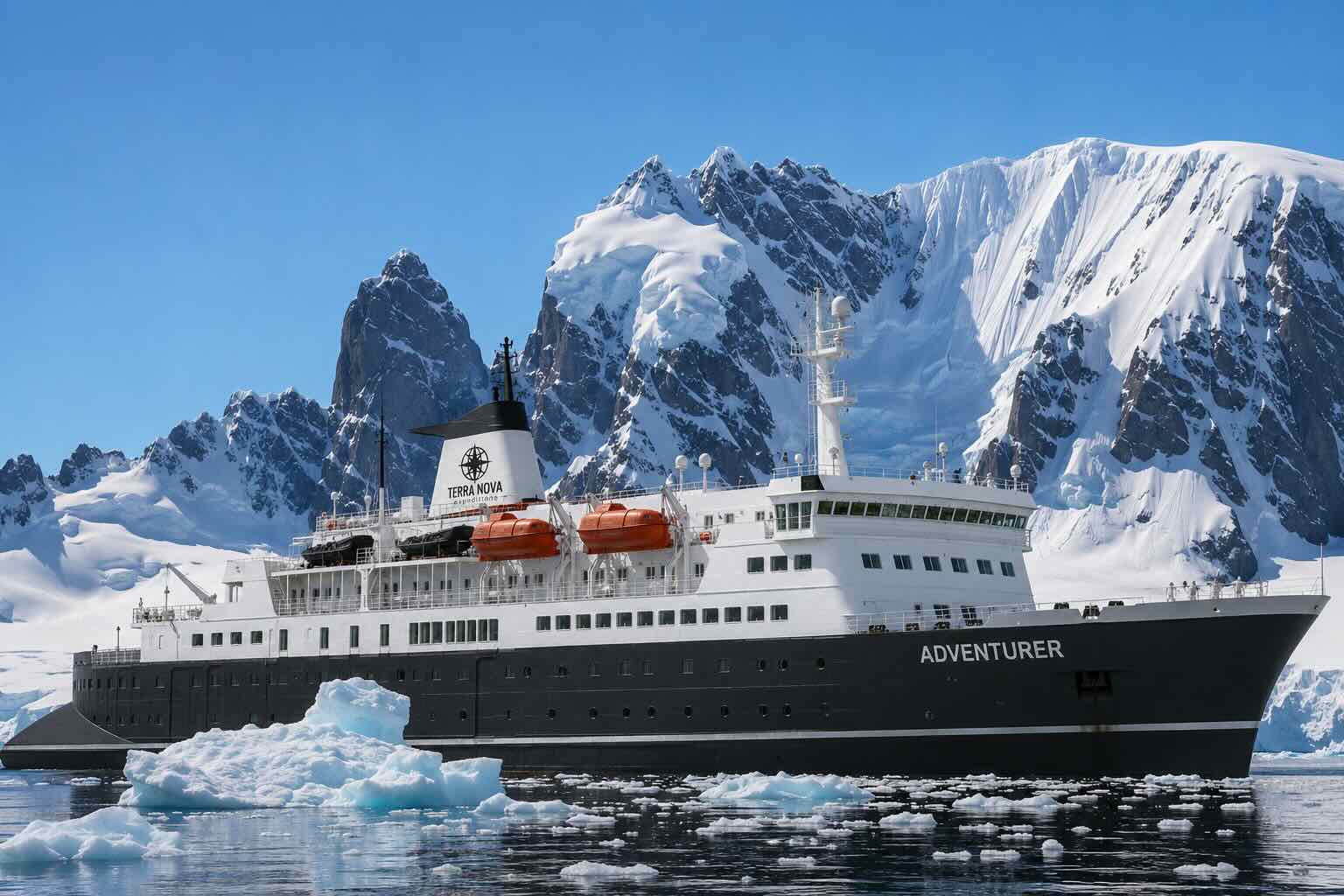
- 99Guests
- 55Cabins
- 1972Launched
- 105 mLength
All ship facts
- Crew
- 60
- Decks
- 6
- Gross tonnage
- 3960
- Speed
- 17 kts
- Width
- 18 m
- Currency on board
- USD
- Language
- English