

Iceland’s Fire & Ice Circumnavigation
All departures of this tripCRUISE ID # HERITAGEHD270602
Reykjavík TO Reykjavík
Suites & Fares
Itinerary
- Day 1June 01, 2027
Pre-Cruise Night
- Day 2June 02, 2027
Reykjavík, Iceland
Sprawling Reykjavík, the nation's nerve center and government seat, is home to half the island's population. On a bay overlooked by proud Mt. Esja (pronounced eh-shyuh), with its ever-changing hues, Reykjavík presents a colorful sight, its concrete houses painted in light colors and topped by vibrant red, blue, and green roofs. In contrast to the almost treeless countryside, Reykjavík has many tall, native birches, rowans, and willows, as well as imported aspen, pines, and spruces.Reykjavík's name comes from the Icelandic words for smoke, reykur, and bay, vík. In AD 874, Norseman Ingólfur Arnarson saw Iceland rising out of the misty sea and came ashore at a bay eerily shrouded with plumes of steam from nearby hot springs. Today most of the houses in Reykjavík are heated by near-boiling water from the hot springs. Natural heating avoids air pollution; there's no smoke around. You may notice, however, that the hot water brings a slight sulfur smell to the bathroom.Prices are easily on a par with other major European cities. A practical option is to purchase a Reykjavík City Card at the Tourist Information Center or at the Reykjavík Youth Hostel. This card permits unlimited bus usage and admission to any of the city's seven pools, the Family Park and Zoo, and city museums. The cards are valid for one (ISK 3,300), two (ISK 4,400), or three days (ISK 4,900), and they pay for themselves after three or four uses a day. Even lacking the City Card, paying admission (ISK 500, or ISK 250 for seniors and people with disabilities) to one of the city art museums (Hafnarhús, Kjarvalsstaðir, or Ásmundarsafn) gets you free same-day admission to the other two.
- Day 3June 03, 2027
Reykjavík, Iceland
Sprawling Reykjavík, the nation's nerve center and government seat, is home to half the island's population. On a bay overlooked by proud Mt. Esja (pronounced eh-shyuh), with its ever-changing hues, Reykjavík presents a colorful sight, its concrete houses painted in light colors and topped by vibrant red, blue, and green roofs. In contrast to the almost treeless countryside, Reykjavík has many tall, native birches, rowans, and willows, as well as imported aspen, pines, and spruces.Reykjavík's name comes from the Icelandic words for smoke, reykur, and bay, vík. In AD 874, Norseman Ingólfur Arnarson saw Iceland rising out of the misty sea and came ashore at a bay eerily shrouded with plumes of steam from nearby hot springs. Today most of the houses in Reykjavík are heated by near-boiling water from the hot springs. Natural heating avoids air pollution; there's no smoke around. You may notice, however, that the hot water brings a slight sulfur smell to the bathroom.Prices are easily on a par with other major European cities. A practical option is to purchase a Reykjavík City Card at the Tourist Information Center or at the Reykjavík Youth Hostel. This card permits unlimited bus usage and admission to any of the city's seven pools, the Family Park and Zoo, and city museums. The cards are valid for one (ISK 3,300), two (ISK 4,400), or three days (ISK 4,900), and they pay for themselves after three or four uses a day. Even lacking the City Card, paying admission (ISK 500, or ISK 250 for seniors and people with disabilities) to one of the city art museums (Hafnarhús, Kjarvalsstaðir, or Ásmundarsafn) gets you free same-day admission to the other two.
- Day 4June 04, 2027
Grundarfjørdur, Iceland
This morning sees us greeted by the glacier-carved terrain of Iceland's Snæfellsnes Peninsula, highlighted by the sparkling waterfalls and icebergs of Drangajökull Glacier, Iceland's northernmost glacier. Enjoy exploring the many charms of fishing village Grundarfjörður, surrounded by spectacular mountains, including the town's landmark Mount Kirkjufell, which stands solitary after being carved out of the main mountain range by two glaciers during the Ice Age. With its natural harbour, it is easy to see why this perfectly positioned town was a prominent trading post, with artefacts supporting its history dating back to Viking times. Grandiose views of the majestic glacier-capped Snæfellsjökull volcano and its otherworldly landscape can be enjoyed at the technically 'active' volcano, which last erupted some 1,800 years ago and is still closely monitored. Snæfellsjökull volcano provided the entry point in Jules Verne's 1864 classic Journey to the Centre of the Earth and is a magical setting for the 12th-century Icelandic sagas. Grundarfjörður is also a sanctuary for the White-tailed Eagle, the largest predatory bird in Iceland. Options include exploring the Langjökull Glacier ice cap on Mount Kirkjufell, or a deep dive into local culture and history with a visit to a traditional farm. Try the local delicacy, fermented Icelandic Shark and encounter Iceland's famous Icelandic Horses, one of the world's oldest and purest horse breeds. - Day 5June 05, 2027
Patreksfjørdur, Iceland
Arriving at the coastal village of Patreksfjörður, population 700, rare golden sands, remnants of scallop shells, replace the traditional black volcanic sands elsewhere in Iceland. While the fishing industry on which the village was built remains an important part of daily life, Patreksfjörður's proximity to the Látrabjarg cliffs, Rauðasandur beach and Dynjandi waterfall has made this tiny town a tourist attraction. According to Iceland's Book of Settlers, Patreksfjörður was named Saint Patrick's Fjord by Celtic Viking Örlygur Hrappsson, who believed the 5th-century 'Apostle of Ireland' was his spiritual guide. This morning we will travel to the spectacular Látrabjarg cliffs. This natural wonder is Europe's largest bird cliff, spanning 14 kilometres long and up to a dizzying 441 metres high of sheer towering cliff face, where up to 10 million seabirds breed each summer. A definitive Latrabjarg bird cliffs cruise experience, and a highlight for any Iceland birding cruise. Safe from foxes, this westernmost point of Iceland provides stunning photographic opportunities from close range of the millions of fearless Atlantic Puffins, Common Guillemots, Razorbills, Brünnich's Guillemots, Kittiwakes and Northern Fulmars nesting here. A multisensory experience on every level, marvel at the amazing views stretching out over the Atlantic Ocean, which supports this seabird mega-city, where the air is alive with beating wings. This afternoon, venture further into the heart of the spectacular fjords through some of Iceland's most rugged and untouched landscapes, as we discover world-famous Dynjandi Waterfall. Situated deep within the fjords in a sheltered bay, the water drops 100 metres via a series of six stepped waterfalls in a formidable display of nature as it traverses a lush arctic meadow filled with wildflowers before reaching the shores of the bay. - Day 6June 06, 2027
Vigur Island, Iceland
Vigur Island is a little more than a mile (1.6 km) in length and about 450 yards (412 m) wide. This green oasis punctuates the waters of the Ísafjarðardjúp fjord east of the town of Isafjordur. The island is home to a single farming family and has some meticulously preserved historical landmarks including Iceland’s only windmill, built in 1840 and used until 1917 for grinding imported wheat from Denmark; and a 200-year-old rowing boat, which is still in use to ferry sheep to the mainland. Summer is the best time to see large numbers of Atlantic Puffins, Arctic Terns and Black Guillemots. One of the export articles from this small island was eider down and one can see where the eider ducks nest and how the down is collected and cleaned.
- Day 7June 07, 2027
Grímsey Island, Iceland
Be sure to be out on deck or in the Observation Lounge as we sail towards the picture postcard town of Siglufjörður, where rows of colourful houses sit nestled at the end of a narrow fjord framed by dramatic mountain scenery on the Trollaskagi Peninsula, and a stone's throw from the Arctic Circle. This former tiny shark fishing village of the 1900s became the capital of the herring fishing boom in the Atlantic, resulting in Iceland's northernmost town becoming one of its most prosperous, fuelling some marvellous examples of Icelandic architecture. While the herring era went bust, locals gave the town a new lease of life, turning the former industrial buildings into cafés, ski resorts and breweries. Wander through the town exploring its quirky cafes, galleries, workshops, church, Folk Music Centre, and famous Herring Era Museum housed in an old herring factory. Enjoy lunch on board as we sail to the remote and rugged island of Grímsey. This tiny island, just five square kilometres, is the northernmost inhabited point of Iceland, and where seabirds outnumber locals by 10,000 to one. The Arctic Circle bisects the island and is marked by the iconic photo op known as the Arctic Circle Monument – a 9-tonne, three metre stone sphere which is moved each year to align with the Arctic Circle. Renowned for its tiny, plucky community, its rugged coastline is dominated by towering columnar basalt cliffs up to 100 metres high and wrapped in an endless expanse of the Arctic Ocean. Zodiac ashore and join our expedition team members for nature and photography walks among wandering sheep, incredible birdlife, and the iconic Grímseyjarviti lighthouse built in 1937 and perched above a sheer cliff on the northern coast. A much loved and incredibly memorable Grimsey Arctic Circle cruise stop. - Day 8June 08, 2027
Husavik, Iceland
The town of Húsavík sits below Húsavíkurfjall mountain on the eastern shore of Skjálfandi bay. Just above the town is lake Botnsvatn, a popular place for outings. The lake is just the right size for a nice hike around it. The lakes surroundings are rich in vegetation and bird life and trout is said to be abundant, though small. Húsavík harbour lies below the bank right in the heart of town. The harbour once boasted a large fishing fleet, bustling with the activity of fishermen. It still serves as a fishing harbour but today's activity revolves more around the successful whale watching businesses. The first organised whale watching excursions in Iceland started from here in 1995. Since then, whale watching has become a major attraction and Húsavík continues to be the leading destination for whale watching. In addition to the tours, a fascinating whale museum is located right by the harbour. Húsavík is considered to be the oldest settlement in Iceland. The Swedish explorer, Gardar Svavarsson, spent one winter there in 870 AD during which time he built himself a house from which the settlement derives its name.
- Day 9June 09, 2027
Borgarfjørdur Eystri, Iceland
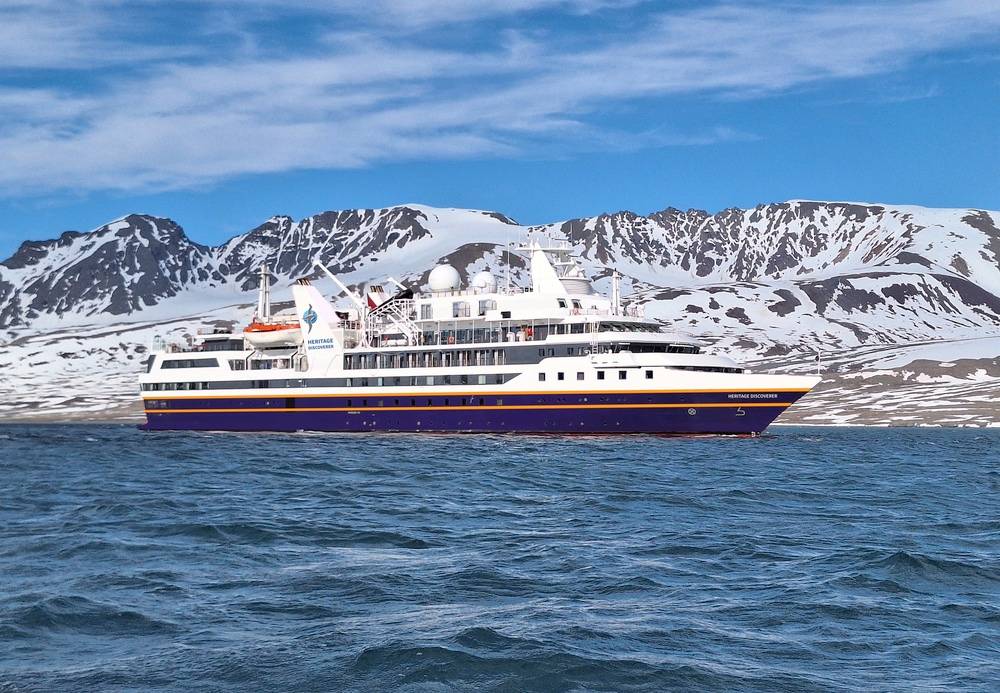
Enjoy a leisurely morning listening to lectures, catching up on our latest adventures or watching our passage unfold from your favourite spot on Heritage Discoverer before we arrive at Borgarfjörður Eystri. Located on Iceland's eastern coastline, the small town of Borgarfjörður Eystri is a renowned puffin viewing site, outdoor adventure playground and Elfin hot spot with what is believed to be one of the most populated 'hidden people' settlements in Iceland. Indeed, the fjord is named after the residency of the Icelandic Elf-queen – Álfaborg, a rocky hill next to the village. During our time exploring this stunning fjord, framed by the peak of Svartvell, stretch your legs with a challenging hike which rewards with sweeping panoramas. Explore the surrounding countryside with your expedition guides or join a local guide touring the small village, including a stop at the local eiderdown shop and an exhibit of Johannes Kjarval, one of Iceland's greatest painters, who grew up in the area. There will also be time to enjoy observing the puffins, beaks filled with fish to feed their young, at their bustling island colony, providing never-ending photographic opportunities. - Day 10June 10, 2027
Djúpivogur, Iceland
It may be surrounded by pulse-raising volcanic scenery, boast extraordinary wildlife, and sit on a dramatic, jutting fjord - but it's fair to say Djúpivogur likes to take things slow. In fact, Djúpivogur relishes its peace and quiet so much that it's won recognition as a 'Cittaslow' - a Slow City. So prepare to take a new, leisurely look around, as you relax into the breathtaking natural glory of Iceland, and explore this unique location - filled with folklore, fabulous food and fantastic fjords.
- Day 11June 11, 2027
Westman Islands, Iceland
The name Vestmannaeyjar refers to both a town and an archipelago off the south coast of Iceland. The largest Vestmannaeyjar island is called Heimaey. It is the only inhabited island in the group and is home to over 4000 people. The eruption of the Eldfell Volcano put Vestmannaeyjar into the international lime light in 1973. The volcano’s eruption destroyed many buildings and forced an evacuation of the residents to mainland Iceland. The lava flow was stopped in its tracks by the application of billions of liters of cold sea water. Since the eruption, life on the small island outpost has returned to the natural ebb and flow of a small coastal fishing community on the edge of the chilly and wild North Atlantic.
- Day 12June 12, 2027
Reykjavík, Iceland
Sprawling Reykjavík, the nation's nerve center and government seat, is home to half the island's population. On a bay overlooked by proud Mt. Esja (pronounced eh-shyuh), with its ever-changing hues, Reykjavík presents a colorful sight, its concrete houses painted in light colors and topped by vibrant red, blue, and green roofs. In contrast to the almost treeless countryside, Reykjavík has many tall, native birches, rowans, and willows, as well as imported aspen, pines, and spruces.Reykjavík's name comes from the Icelandic words for smoke, reykur, and bay, vík. In AD 874, Norseman Ingólfur Arnarson saw Iceland rising out of the misty sea and came ashore at a bay eerily shrouded with plumes of steam from nearby hot springs. Today most of the houses in Reykjavík are heated by near-boiling water from the hot springs. Natural heating avoids air pollution; there's no smoke around. You may notice, however, that the hot water brings a slight sulfur smell to the bathroom.Prices are easily on a par with other major European cities. A practical option is to purchase a Reykjavík City Card at the Tourist Information Center or at the Reykjavík Youth Hostel. This card permits unlimited bus usage and admission to any of the city's seven pools, the Family Park and Zoo, and city museums. The cards are valid for one (ISK 3,300), two (ISK 4,400), or three days (ISK 4,900), and they pay for themselves after three or four uses a day. Even lacking the City Card, paying admission (ISK 500, or ISK 250 for seniors and people with disabilities) to one of the city art museums (Hafnarhús, Kjarvalsstaðir, or Ásmundarsafn) gets you free same-day admission to the other two.
About the Ship
Heritage Discoverer

- 130Guests
- 70Cabins
- 1989Launched
- 108 mLength
All ship facts
- Crew
- 15
- Decks
- 5
- Gross tonnage
- 6158
- Speed
- 14 kts
- Width
- 16 m
- Currency on board
- USD
- Language
- en