

CRUISE ID # AQUA8560
Glasgow TO Tromsø
Suites & Fares
Itinerary
- Day 1May 20, 2028
Glasgow, Scotland
Start your adventure in Scotland’s largest city, Glasgow which is overflowing with historic landmarks and a vibrant culture. The distinct architecture is reminiscent classic 19th-century fused together with modern early 20th-century dubbed ‘Glasgow Style’. The checkerboard layout makes the city easy to navigate with lively street entertainment around every corner.
- Day 2May 21, 2028
Iona, Hebrides, Scotland
Head up to the Scottish Isles and find Iona, a small island off the southwest coal of Mill in the Inner Hebrides. With just 130 inhabitants, Iona is famed for Iona Abbey, which was once the centre of Gaelic monasticism. The tranquil lands are typical of Hebridean beauty and the approach is particularly spectacular when the weather is sunny.
- Day 2May 21, 2028
Staffa Island, Scotland
2. - Day 3May 22, 2028
St. Kilda Archipelago, Scotland
St Kilda is a remarkable uninhabited archipelago some 40 nautical miles beyond the Outer Hebrides. The stunning cliffs and sea stacks are home to the most important seabird breeding colony in northwest Europe. St Kilda is one of the few places in the world to have received dual World Heritage status from UNESCO in recognition of its Natural Heritage and cultural significance. Village Bay on the island of Hirta once supported a population of over 200, but the last islanders left in the 1930s. Recent restoration work on the village by the National Trust for Scotland offers a marvellous link with the past. One of the caretakers acts as shopkeeper and postmaster for any visitors who might like to send a postcard home from St. Kilda.
- Day 3May 22, 2028
Isle of Harris, Scotland
2. - Day 4May 23, 2028
Callanish, Scotland
Callanish is a village on the west side of the Isle of Lewis, in the Outer Hebrides, Scotland. Callanish is within the parish of Uig. A linear settlement with a jetty, it is on a headland jutting into Loch Roag, a sea loch 13 miles west of Stornoway.
- Day 4May 23, 2028
Stornoway, Isle of Lewis, Scotland
Tour description Stornoway, Scotland The Isle of Lewis and Harris is the northernmost and largest of the Outer Hebrides-the Western Isles in common parlance. The island's only major town, Stornoway, is on a nearly landlocked harbor on the east coast of Lewis. It's the port capital for the Outer Hebrides and the island's cultural center, such that it is. Stornoway has an increasing number of good restaurants. Lewis has some fine historic attractions, including the Calanais Standing Stones-a truly magical place. The Uists are known for their rare, plentiful wildlife. Stornoway. Besides being the island's main entry point for ferries, Stornoway is also Lewis's main arts center. You'll find some good restaurants in town if you want to have lunch off the ship. The town can be explored by bicycle if you are so inclined. Local rental shops can give you advice on where to ride, including a route to Tolsta that takes in five stunning beaches before reaching the edge of moorland. An Lanntair Arts Centre. The fabulous An Lanntair Arts Centre has exhibitions of contemporary and traditional art, as well as a cinema, a gift shop, and a restaurant serving international and Scottish fare. There are frequent traditional musical and theatrical events in the impressive auditorium. Kenneth St.. Black House. In the small community of Arnol, the Black House is a well-preserved example of an increasingly rare type of traditional Hebridean home. Once common throughout the islands-even into the 1950s-these dwellings were built without mortar and thatched on a timber framework without eaves. Other characteristic features include an open central peat hearth and the absence of a chimney-hence the soot and the designation black. On display inside are many of the house's original furnishings. To reach Arnol from Port of Ness, head south on the A857 and pick up the A858 at Barvas. Off A858, 21 mi southwest of Port of Ness. Admission charged. Calanais Standing Stones. These impressive stones are actually part of a cluster of several different archaeological sites in this area. Probably positioned in several stages between 3000 BC and 1500 BC, the grouping consists of an avenue of 19 monoliths extending northward from a circle of 13 stones, with other rows leading south, east, and west. Ruins of a cairn sit within the circle on the east side. Researchers believe they may have been used for astronomical observations, but you can create your own explanations. The visitor center has an exhibit on the stones, a gift shop, and a tearoom. On an unmarked road off A858. Admission charged. Dun Carloway. One of the best-preserved Iron Age brochs (circular stone towers) in Scotland, Dun Carloway dominates the scattered community of Carloway. The mysterious tower was probably built around 2,000 years ago as protection against seaborne raiders. The Dun Broch Centre explains more about the broch and its setting. Off A857. Gearrannan. Up a side road north from Carloway, Gearrannan is an old black-house village that has been brought back to life with a museum screening excellent short films on peat cutting and weaving. For a unique experience, groups can rent the restored houses. Leverburgh. At Leverburgh you can take the ferry to North Uist. Nearby Northton has several attractions; St. Clement's Church at Rodel is particularly worth a visit. MacGillivray Centre. Located in a round building overlooking the bay, the MacGillivray Centre gives insight into the life and work of William MacGillivray (1796-1852), a noted naturalist with strong links to Harris. MacGillivray authored the five-volume History of British Birds. This is a great location for a picnic (there are tables for just such a purpose). A walk to a ruined church starts at the parking lot. A859, Northton. Seallam! Visitor Centre and Co Leis Thu? Genealogical Research Centre. The center is where you can trace your Western Isles ancestry. Photographs and interpretive signs describe the history of Harris and its people. The owners organize guided walks and cultural evenings weekly between May and September. Off A859, Northton. Admission charged. St. Clement's Church. At the southernmost point of Harris is the community of Rodel, where you can find St. Clement's Church, a cruciform church standing on a hillock. This is the most impressive pre-Reformation church in the Outer Hebrides; it was built around 1500 and contains the magnificently sculptured tomb (1528) of the church's builder, Alasdair Crotach, MacLeod chief of Dunvegan Castle. Rodel is 3 mi south of Leverburgh and 21 mi south of Tarbert. A859, Rodel. Port of Ness. The stark, windswept community of Port of Ness, 30 mi north of Stornoway, cradles a small harbor squeezed in among the rocks. Butt of Lewis Lighthouse. At the northernmost point of Lewis stands the Butt of Lewis Lighthouse, designed by David and Thomas Stevenson (of the prominent engineering family whose best-known member was not an engineer at all, but the novelist Robert Louis Stevenson). The structure was first lighted in 1862. The adjacent cliffs provide a good vantage point for viewing seabirds, whales, and porpoises. The lighthouse is northwest of Port of Ness along the B8014. Shopping Harris tweed is available at many outlets on the islands, including some of the weavers' homes; keep an eye out for signs directing you to weavers' workshops. Harris Tweed Artisans Cooperative. The Harris Tweed Artisans Cooperative sells stylish and quirky hand-crafted tweed clothing, hats, accessories, all made by artists belonging to the cooperative. 40 Point St., Stornoway. Borgh Pottery. At Borgh Pottery, open from Monday to Saturday 9:30 to 6, you can buy attractive hand-thrown studio pottery made on the premises, including lamps, vases, mugs, and dishes. Fivepenny House, A857, Borve.
- Day 5May 24, 2028
Mousa Island, Scotland
We sail into Scotland’s Shetland Islands to visit Mousa Broch, a remarkably preserved Iron Age stone tower. The site offers insight into Scotland’s early history, while the surrounding coastline offers the opportunity to encounter to seabirds and seals. - Day 6May 25, 2028
Ålesund, Norway
The coastal town of Ålesund is the commercial capital of the Møre og Romsdal district. But more important, it is noted for its characteristic Jugendstil (Art Nouveau) buildings, which some claim make Ålesund one of the most beautiful towns in Norway. This Art Nouveau style emerged when the town was completely rebuilt after a devastating fire in 1904 destroyed nearly 800 buildings and left 10,000 residents homeless. It is said that the fire started by a tipped oil lamp. Rebuilding was carried out with the help of many young, foreign architects who added their own flourishes to the architectural blend of German Jugendstil and Viking roots. Today, narrow streets are crammed with buildings topped with turrets, spires and gables that bear decorations of dragonheads and curlicues. As one of the few remaining Art Nouveau towns in the world, in 1998 Ålesund was awarded the coveted Houens National Memorial Prize for the preservation of its unique architecture.
- Day 7May 26, 2028
Smøla, Norway
Wake up to views of the low-lying islands and open seascapes which define Smøla. The scattered islets provide habitat for rich birdlife, including white-tailed eagles. Small fishing hamlets along the coast give a glimpse into Norway’s enduring maritime way of life. - Day 8May 27, 2028
Brønnøysund, Norway
Sitting just below the Arctic Circle, a visit to Bronnoysund guarantees a journey of culture and extraordinary scenery. Bronnoysund is quintessential Norway, and encompasses everything you'd expect from this stunning country - along with plenty of surprises along the way. Raking fjords, scattered islands, and roaring rivers provide a huge natural bounty - but it’s the Torghatten Mountain that’s Bronnoysund’s true crowning glory. Torghatten Mountain rises like a colossal castle of sheer granite, and is particularly striking because it’s punctured right through the centre by a giant hole. Line up the view just right, and you can see sunlight bursting through the hole, as if illuminated by a massive spotlight. It's hard to imagine how such a striking phenomenon would form naturally, and indeed the local folklore has a persuasive explanation – that it was created when an arrow ripped through the troll king's hat, which was thrown into the air to protect a fleeing girl. The hat turned to stone, and the arrow’s hole is preserved there to this day. If you care to climb Torghatten Mountain, you can walk through its cavernous interior, to look down over the red wooden barns and glistening lakes below.
- Day 9May 28, 2028
Nusfjord, Norway
1. - Day 9May 28, 2028
Trollfjord, Norway
2. - Day 10May 29, 2028
Tromsø, Norway
With its centre located on the island of Tromsø, the municipality of Tromsø is more than five times the size of Norway’s capital, Oslo, and is the world’s northernmost university city. Lying 200 miles inside the Arctic Circle, it is known as the 'Gateway to the Arctic' because it was used as a starting point for hunters looking for Arctic foxes, polar bears and seals. In the 19th century it was a base for explorers on Arctic expeditions – a history that is remembered in the city’s Polar Museum, which you can visit on an excursion. Also commemorated in the area is the history of Norway’s indigenous people, the Sami. Visitors can learn about the traditions, heritage and modern preservation of the Sami culture at the Tromsø Museum. Nowadays, Tromsø is a charming mix of old and new, with wooden buildings sitting alongside contemporary architecture such as the impressive glacier-like Arctic Cathedral, which features one of the largest stained glass windows in Europe. Looking down on the city is Mount Storsteinen, and a cable car runs to the top, giving wonderful views over the surrounding countryside of forested peaks and reindeer pastures.
About the Ship
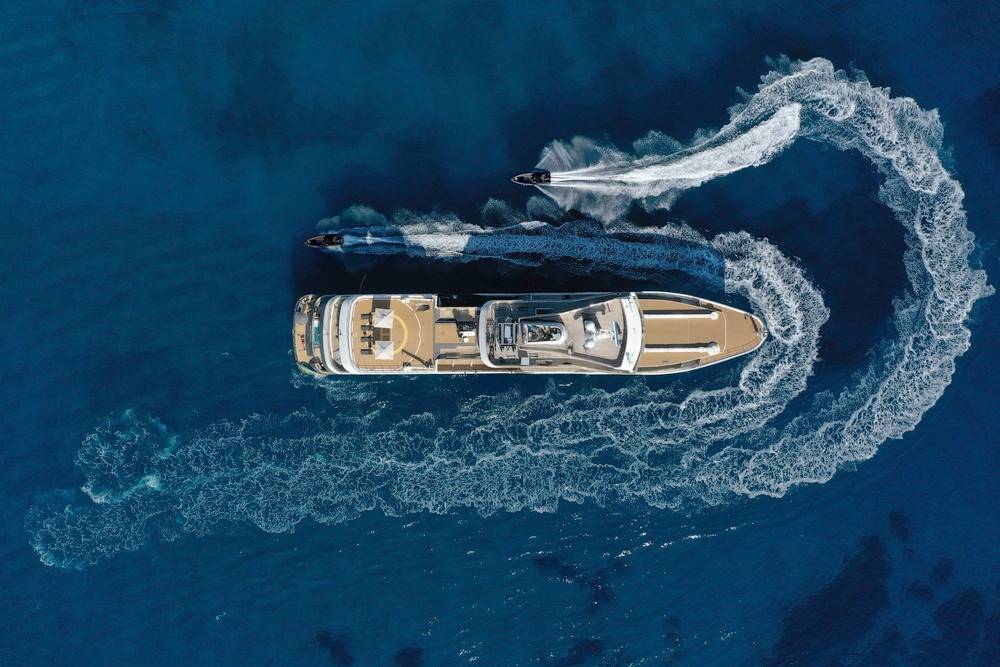
Aqua Lares

- 30Guests
- 1974Launched
- 73 mLength
All ship facts
- Crew
- 32
- Decks
- 6
- Gross tonnage
- 2407
- Speed
- 12 kts
- Width
- 14 m
- Currency on board
- USD
- Language
- en