

High Arctic Expedition: Where Art Meets Land
All departures of this tripCRUISE ID # ADVCANADAHI28-2-ON
Resolute Bay, Nunavut TO Kangerlussuaq Havn
Suites & Fares
Itinerary
- Day 1September 03, 2028
Resolute Bay, Nunavut, Canada
Arrive by charter flight from Ottawa and step into Qausuittuq, set on gravel flats and moraine beneath the glow of continuous summer light. The community’s history of relocation in 1953 intertwines with its present role as a hub for Arctic research and travel. As you prepare to embark aboard the Ocean Nova, take time to orient yourself to the stories and landscapes that shape this place. - Day 2September 04, 2028
Beechey Island, Nunavut, Canada
Beechey Island is a small island off the southwest coast of Devon Island, separated by a narrow waterway called the Barrow Strait. Captain William Edward Parry was the first European to visit the island in 1819. His lieutenant, Frederick William Beechey, named the island after his father, the artist William Beechey (1753–1839). Beechey Island played a significant role in the history of Arctic Exploration. During the winter of 1845-46, Sir John Franklin and his men camped on the island as part of their ill-fated quest to find the Northwest Passage. Mummified remains of three of Franklin’s crew were discovered, giving a better understanding of what happened before the disappearance of the expedition. In 1850 Edward Belcher used the island as a base while surveying the area. Later, in 1903, Norwegian explorer Roald Amundsen stopped at the island at the beginning of his successful voyage in search for the Northwest Passage. Subsequently, Beechey Island has been declared a "Territorial Historic Site" since 1975 by the Northwest Territories government
- Day 3September 05, 2028
Lancaster Sound, Tallurutiup Imanga National Park, Nunavut, Canada
Sail through Tallurutiup Imanga, one of Canada’s largest marine protected areas, alive with whales, seals, and seabirds. Beneath towering cliffs and drifting ice, the sea glimmers with shifting light. Step ashore on Devon Island, the world’s largest uninhabited island, where glaciers meet the sea and tundra unfolds in broad, glacial valleys. Here, light and silence create their own compositions, inviting stillness, reflection, and a deep sense of the Arctic’s living beauty. - Day 3September 05, 2028
Devon Island, Nunavut, Canada
Devon Island, located in Baffin Bay, is only slightly smaller than Croatia. The eastern side is frosted by the Devon Ice Cap, while on the western half of the island lays the 14 mile wide Haughton impact crater. It was created around 39 million years ago when a meteorite crashed into the land. The landscape surrounding this site resembles the surface of Mars. In fact, for the past decade scientists have conducted research here to determine how humans might live one day on Mars. British Arctic explorers Robert Bylot and William Baffin were the first Europeans to sight the island in 1616. In 1819-1820, William Parry charted the island, naming it North Devon after Devon in England. Despite repeated attempts at trading settlements, the strong wind conditions and cold climate eventually drove everyone away leaving Devon Island as a likely candidate for being the world’s largest uninhabited island.
- Day 4September 06, 2028
Grise Fjord, Canada
Grise Fiord is an Inuit hamlet on the southern tip of Ellesmere Island, in the Qikiqtaaluk Region, Nunavut, Canada. It is one of three populated places on the island; despite its low population, it is the largest community on Ellesmere Island.
- Day 5September 07, 2028
Ellesmere Island, Nunavut, Canada
Explore the rugged coastline of Ellesmere, Canada’s northernmost island. Towering mountains, vast ice caps, and deep fjords define a landscape of extraordinary scale. Here, the High Arctic exceeds the images that first inspired us, revealing a world more intricate, dynamic, and alive than any single representation can capture. - Day 6September 08, 2028
Kane Basin, Baffin, Canada
Sail into Kane Basin, where Ellesmere Island and Greenland nearly meet. Glaciers tower above drifting sea ice, and the shifting Arctic light continually transforms the passage. Long travelled by Inuit, these waters later became a route for expeditions seeking both the lost Franklin expedition and a way to the North Pole. The basin bears the name of American explorer Elisha Kent Kane, who crossed it in 1854 during his search for Franklin. - Day 7September 09, 2028
Cruising Smith Sound
Venture through Smith Sound, the dramatic channel connecting Baffin Bay with Kane Basin and part of the greater Pikialasorsuaq region. Pikialasorsuaq means “great upwelling” in Kalaallisut and is known in Nunavut as Sarvarjuaq. Recurring open water within the surrounding sea ice makes this the Arctic’s largest polynya and one of the most biologically productive regions north of the Arctic Circle. Nutrient-rich waters sustain an extraordinary abundance of life, drawing whales, seals, and millions of seabirds to this vital Arctic ecosystem. - Day 8September 10, 2028
Cruising Smith Sound
Venture through Smith Sound, the dramatic channel connecting Baffin Bay with Kane Basin and part of the greater Pikialasorsuaq region. Pikialasorsuaq means “great upwelling” in Kalaallisut and is known in Nunavut as Sarvarjuaq. Recurring open water within the surrounding sea ice makes this the Arctic’s largest polynya and one of the most biologically productive regions north of the Arctic Circle. Nutrient-rich waters sustain an extraordinary abundance of life, drawing whales, seals, and millions of seabirds to this vital Arctic ecosystem. - Day 9September 11, 2028
Day at Sea
- Day 10September 12, 2028
Upernavik, Greenland
Greenland’s coast breaks apart here into a vast maze of islands, narrow channels, and drifting ice. Upernavik, meaning “the springtime place,” rises from this intricate seascape in a bright sweep of colourful houses and a working harbour. Fishing and hunting remain central to life across the archipelago, connecting Upernavik with the smaller communities scattered along the coast. Its historic quarter forms the world’s northernmost open-air museum, preserving the church, trading buildings, boats, and tools of an earlier era. Surrounded by rock, sea, and ice, Upernavik reveals the remarkable character of life along Greenland’s northern coast. - Day 11September 13, 2028
Southwest Greenland, Greenland
Sail among towering glaciers and drifting bergs, each one a shifting sculpture in white and blue. Fjords echo with the sound of calving ice, and mountains rise sheer above waters crowded with floes. The scale and geometry here—immense, elemental, ever-changing—recall the stark forms the Group of Seven once sought to capture in paint. - Day 12September 14, 2028
Ilulissat (Jakobshavn), Greenland
Known as the birthplace of icebergs, the Ilulissat Icefjord produces nearly 20 million tons of ice each day. In fact, the word Ilulissat means “icebergs” in the Kalaallisut language. The town of Ilulissat is known for its long periods of calm and settled weather, but the climate tends to be cold due to its proximity to the fjord. Approximately 4,500 people live in Ilulissat, the third-largest town in Greenland after Nuuk and Sisimiut. Some people here estimate that there are nearly as many sled dogs as human beings living in the town that also boasts a local history museum located in the former home of Greenlandic folk hero and famed polar explorer Knud Rasmussen.
- Day 13September 15, 2028
Sisimiut (Holsteinsborg), Greenland
Located just north of the Arctic Circle, Sisimiut is the northernmost town in Greenland where the port remains free of ice in the winter. Yet it is also the southernmost town where there is enough snow and ice to drive a dogsled in winter and spring. In Sisimiut, travelling by sled has been the primary means of winter transportation for centuries. In fact, the area has been inhabited for approximately 4,500 years. Modern Sisimiut is the largest business center in the north of Greenland, and is one of the fastest growing Greenlandic cities. Commercial fishing is the lead economy in the town‘s thriving industrial base.
- Day 14September 16, 2028
Kangerlussuaq Havn, Greenland
The name Kangerlussuaq means "Big Fjord" in the local Kalaallisut language. The settlement of about 500 people is located in western Greenland on flat land at the head of a fjord with the same name. Kangerlussuaq is the site of Greenland's largest commercial airport and most of the economy here is dependent on the air transportation hub and tourism. The rugged lands around the settlement support terrestrial Arctic fauna including muskoxen, caribou, and Gyrfalcons.
About the Ship
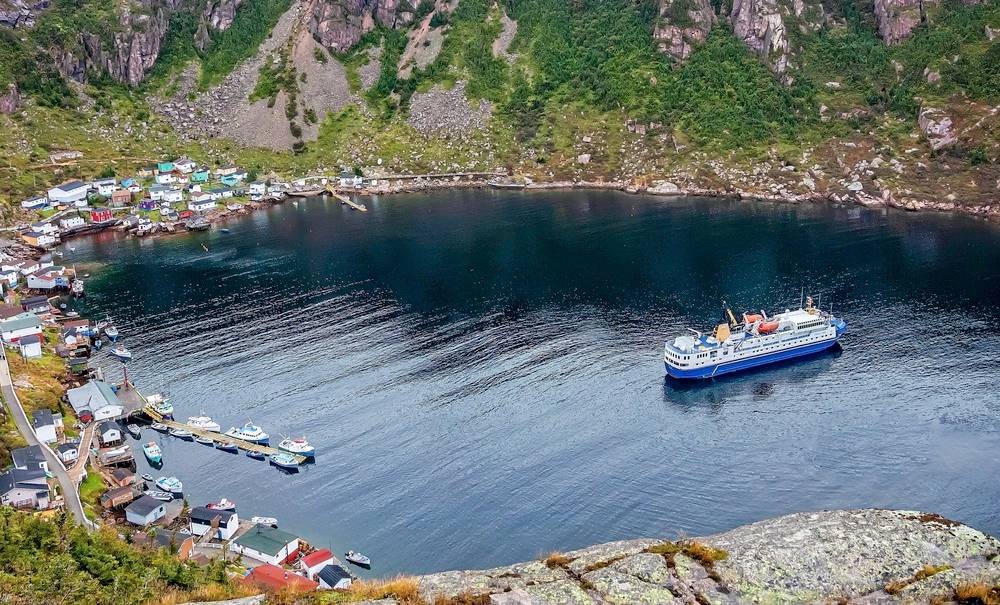
Ocean Nova

- 79Guests
- 1992Launched
- 73 mLength
All ship facts
- Crew
- 32
- Speed
- 13 kts
- Width
- 11 m
- Currency on board
- USD
- Language
- en