

High Arctic Expedition: Where Art Meets Land
All departures of this tripCRUISE ID # ADVCANADAA727-ON
Resolute Bay, Nunavut TO Nuuk (Godthaab)
Suites & Fares
Itinerary
- Day 1August 31, 2027
Resolute Bay, Nunavut, Canada
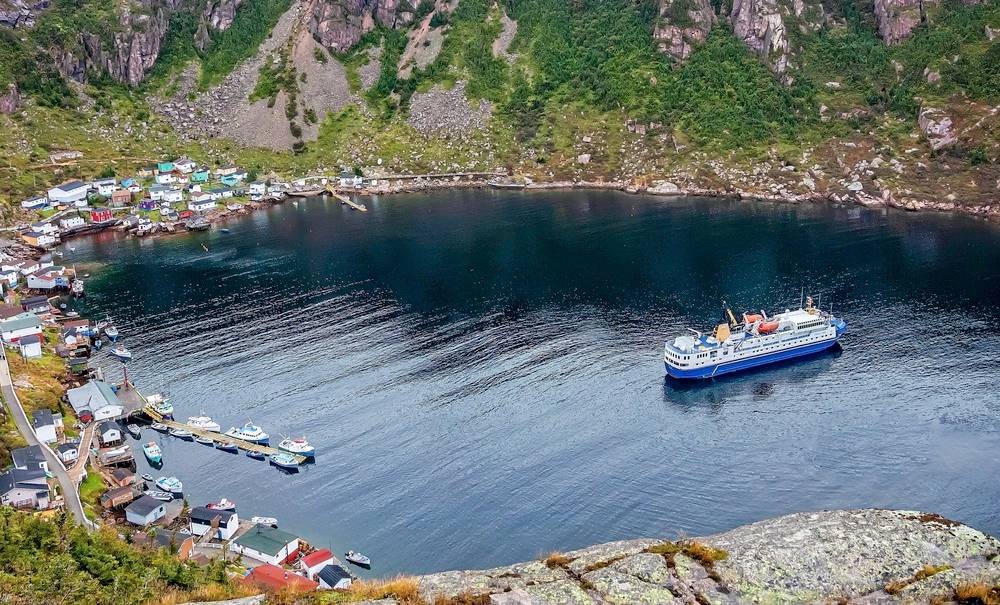
Arrive by charter flight from Ottawa and step into Qausuittuq, set on gravel flats and moraine beneath the glow of continuous summer light. The community’s history of relocation in 1953 intertwines with its present role as a hub for Arctic research and travel. As you prepare to embark aboard the Ocean Nova, take time to orient yourself to the stories and landscapes that shape this place. - Day 2September 01, 2027
Beechey Island, Nunavut, Canada
Beechey Island is a small island off the southwest coast of Devon Island, separated by a narrow waterway called the Barrow Strait. Captain William Edward Parry was the first European to visit the island in 1819. His lieutenant, Frederick William Beechey, named the island after his father, the artist William Beechey (1753–1839). Beechey Island played a significant role in the history of Arctic Exploration. During the winter of 1845-46, Sir John Franklin and his men camped on the island as part of their ill-fated quest to find the Northwest Passage. Mummified remains of three of Franklin’s crew were discovered, giving a better understanding of what happened before the disappearance of the expedition. In 1850 Edward Belcher used the island as a base while surveying the area. Later, in 1903, Norwegian explorer Roald Amundsen stopped at the island at the beginning of his successful voyage in search for the Northwest Passage. Subsequently, Beechey Island has been declared a "Territorial Historic Site" since 1975 by the Northwest Territories government
- Day 3September 02, 2027
Lancaster Sound, Tallurutiup Imanga National Park, Nunavut, Canada
Sail through Tallurutiup Imanga, one of Canada’s largest marine protected areas, alive with whales, seals, and seabirds. Beneath towering cliffs and drifting ice, the sea glimmers with shifting light. Step ashore on Devon Island, the world’s largest uninhabited island, where glaciers meet the sea and tundra unfolds in broad, glacial valleys. Here, light and silence create their own compositions, inviting stillness, reflection, and a deep sense of the Arctic’s living beauty. - Day 3September 02, 2027
Devon Island, Nunavut, Canada
Devon Island, located in Baffin Bay, is only slightly smaller than Croatia. The eastern side is frosted by the Devon Ice Cap, while on the western half of the island lays the 14 mile wide Haughton impact crater. It was created around 39 million years ago when a meteorite crashed into the land. The landscape surrounding this site resembles the surface of Mars. In fact, for the past decade scientists have conducted research here to determine how humans might live one day on Mars. British Arctic explorers Robert Bylot and William Baffin were the first Europeans to sight the island in 1616. In 1819-1820, William Parry charted the island, naming it North Devon after Devon in England. Despite repeated attempts at trading settlements, the strong wind conditions and cold climate eventually drove everyone away leaving Devon Island as a likely candidate for being the world’s largest uninhabited island.
- Day 4September 03, 2027
Grise Fjord, Canada
Grise Fiord is an Inuit hamlet on the southern tip of Ellesmere Island, in the Qikiqtaaluk Region, Nunavut, Canada. It is one of three populated places on the island; despite its low population, it is the largest community on Ellesmere Island.
- Day 5September 04, 2027
Ellesmere Island, Nunavut, Canada
Explore the rugged coastline of Ellesmere, Canada’s most northerly island. Towering mountains, vast ice caps, and deep fjords define this northern wilderness. The austere beauty recalls Lawren Harris’s Arctic visions—landscapes of pure form and luminous stillness. - Day 6September 05, 2027
Kane Basin, Baffin, Canada
Sail into Kane Basin, where Ellesmere Island and Greenland nearly meet. Glaciers tower, sea ice drifts, and the shifting Arctic light transforms every moment. For generations, Inuit navigated these passages with skill and insight—long before explorers heading toward the Pole followed in their wake. - Day 7September 06, 2027
Ellesmere Island, Nunavut, Canada
Framed by steep glacial cliffs and mirrored waters, Alexandria Fjord reveals a softer side of the High Arctic. In late summer, tundra mosses and wildflowers lend muted colour to the valley beneath sheltering peaks. Here, the stillness feels sacred—as though the land itself was holding its breath. - Day 8September 07, 2027
Qaanaaq, Greenland
In AD 850, the Vikings established their parliament in Tórshavn, a name which translates as "Thor's harbor." It was named after Thor, the god of thunder and lightning in Norse mythology. The town became a center of trade for the island, and in fact was designated as the only legal place for the islanders to sell and buy products. This trade monopoly was abolished in 1856. Today it is the capital and largest city of the Faroe Islands, with fish-processing plants, a shipyard, and woolen products making up. It is considered to be one of the oldest capitals in Northern Europe.
- Day 9September 08, 2027
Cape York, Greenland
Visit the arctic seascape of Cape York, Greenland. Located on the northwestern coast of Greenland in Baffin Bay, Cape York is an important geographical feature delimiting the Melville Bay at its northwestern end and Kiatassuaq Island at its other end. There is a chain of coastal islands that stretches between the two capes, most notably Meteorite Island, named for the discovery one of the world’s largest iron meteorites in Savissivik, a settlement on the island. The iron from this meteorite attracted Inuit migrating from Arctic Canada who used the metal in making tools and harpoons. Visitors to this region will see iconic drifting blue-white icebergs that are shrinking as the earth temperature rises.
- Day 10September 09, 2027
Day at Sea
- Day 11September 10, 2027
Upernavik, Greenland
Nestled amongst a maze of islands, Upernavik is a town where past and present meet on the edge of the Arctic. Visit Greenland’s oldest museum, founded in 1959, with exhibits housed in historic buildings that share stories of Inuit life and colonial history. This is also where a young Knud Rasmussen—later known for his Thule Expeditions—spent part of his youth learning the skills and traditions that shaped his future. As you wander among brightly painted houses and gaze over a sea strewn with ice, you’ll feel how deeply place and story intertwine here. - Day 12September 11, 2027
Southwest Greenland, Greenland
Sail among towering glaciers and drifting bergs, each one a shifting sculpture in white and blue. Fjords echo with the sound of calving ice, and mountains rise sheer above waters crowded with floes. The scale and geometry here—immense, elemental, ever-changing—recall the stark forms the Group of Seven once sought to capture in paint. - Day 13September 12, 2027
Qeqertarsuaq (Godhavn), Greenland
Visit Qeqertarsuaq on Disko Island, a place shaped by volcanic forces and known for striking geological contrasts. Black sand beaches meet basalt cliffs, while icebergs drift past offshore. Hike to a waterfall that cascades down from the high tundra plateau, carving bright paths through dark rock. The juxtapositions here—fiery geology against icy seas, flowing water against frozen forms—echo the Group of Seven’s fascination with elemental contrasts. - Day 14September 13, 2027
Sisimiut (Holsteinsborg), Greenland
Located just north of the Arctic Circle, Sisimiut is the northernmost town in Greenland where the port remains free of ice in the winter. Yet it is also the southernmost town where there is enough snow and ice to drive a dogsled in winter and spring. In Sisimiut, travelling by sled has been the primary means of winter transportation for centuries. In fact, the area has been inhabited for approximately 4,500 years. Modern Sisimiut is the largest business center in the north of Greenland, and is one of the fastest growing Greenlandic cities. Commercial fishing is the lead economy in the town‘s thriving industrial base.
- Day 15September 14, 2027
Nuuk (Godthaab), Greenland
Nuuk, meaning “the cape”, was Greenland’s first town (1728). Started as a fort and later mission and trading post some 240 kilometers south of the Arctic Circle, it is the current capital. Almost 30% of Greenland’s population lives in the town. Not only does Nuuk have great natural beauty in its vicinity, but there are Inuit ruins, Hans Egede’s home, the parliament, and the Church of our Saviour as well. The Greenlandic National Museum has an outstanding collection of Greenlandic traditional dresses, as well as the famous Qilakitsoq mummies. The Katuaq Cultural Center’s building was inspired by the undulating Northern Lights and can house 10% of Nuuk’s inhabitants.
About the Ship
Ocean Nova

- 79Guests
- 1992Launched
- 73 mLength
All ship facts
- Crew
- 32
- Speed
- 13 kts
- Width
- 11 m
- Currency on board
- USD
- Language
- en