

Ellesmere Island & North Greenland: Journey to the Top of the World
All departures of this tripCRUISE ID # ADVCANADAEN27-ON
Resolute Bay, Nunavut TO Resolute Bay, Nunavut
Suites & Fares
Itinerary
- Day 1August 19, 2027
Resolute Bay, Nunavut, Canada
Beneath the lingering glow of the Arctic summer sun, Qausuittuq, “the place with no dawn,” welcomes you to the High Arctic. Set amid gravel flats and rolling moraine, this community carries stories of adaptation and renewal, from relocation in 1953 to its role today as a gateway for Arctic research and travel. Take time to orient yourself to the land and its stories before embarking aboard the Ocean Nova. The North awaits. - Day 2August 20, 2027
Lancaster Sound, Tallurutiup Imanga National Park, Nunavut, Canada
Enter Tallurutiup Imanga, a thriving marine sanctuary where whales, walrus, seals, and seabirds gather among towering cliffs, deep fjords, and endless horizons. Step ashore on Devon Island, where glaciers meet the sea and archaeological traces reflect centuries of Inuit use and knowledge of this land. - Day 3August 21, 2027
Lancaster Sound, Tallurutiup Imanga National Park, Nunavut, Canada
Enter Tallurutiup Imanga, a thriving marine sanctuary where whales, walrus, seals, and seabirds gather among towering cliffs, deep fjords, and endless horizons. Step ashore on Devon Island, where glaciers meet the sea and archaeological traces reflect centuries of Inuit use and knowledge of this land. - Day 4August 22, 2027
Qaanaaq, Greenland
In AD 850, the Vikings established their parliament in Tórshavn, a name which translates as "Thor's harbor." It was named after Thor, the god of thunder and lightning in Norse mythology. The town became a center of trade for the island, and in fact was designated as the only legal place for the islanders to sell and buy products. This trade monopoly was abolished in 1856. Today it is the capital and largest city of the Faroe Islands, with fish-processing plants, a shipyard, and woolen products making up. It is considered to be one of the oldest capitals in Northern Europe.
- Day 5August 23, 2027
Kane Basin, Baffin, Canada
Sail into Kane Basin, where the shores of Ellesmere Island and Greenland almost meet. Towering glaciers, drifting sea ice, and Arctic light set the stage for an unforgettable journey through one of the North’s most dramatic waterways. For generations, Inuit navigated these passages with exceptional skill, later followed by explorers heading toward the Pole. Over these two days, you’ll feel the spirit of exploration alive in the shifting light and every drifting floe. - Day 6August 24, 2027
Kane Basin, Baffin, Canada
Sail into Kane Basin, where the shores of Ellesmere Island and Greenland almost meet. Towering glaciers, drifting sea ice, and Arctic light set the stage for an unforgettable journey through one of the North’s most dramatic waterways. For generations, Inuit navigated these passages with exceptional skill, later followed by explorers heading toward the Pole. Over these two days, you’ll feel the spirit of exploration alive in the shifting light and every drifting floe. - Day 7August 25, 2027
Hans Island, Greenland
Set foot on Tartupaluk—a place few will ever visit. Perched in the middle of the Nares Strait between Canada and Greenland, this small, rocky island has long been a crossroads for Inuit, who travelled these waters freely for generations. In modern times, it became the focus of a good-natured yet symbolically potent territorial dispute between Canada and Denmark. In 2022, a historic agreement resolved the issue, establishing shared stewardship between Canada and Greenland and affirming Inuit mobility rights. Standing on Tartupaluk, with Greenland to one side and Canada to the other, you’ll feel the quiet power of shared care for the North—and the enduring movement of Inuit across these waters. - Day 8August 26, 2027
Cruising Smith Sound
Venture through Smith Sound, the dramatic channel linking Kane Basin to Baffin Bay and the southern entrance to Sarvarjuaq/Pikialasorsuaq (The North Water Polynya) — “The Great Upwelling.” Surrounded by shifting sea ice, this vast recurring area of open water is the largest Arctic polynya and the most biologically productive region north of the Arctic Circle. Its nutrient-rich waters breathe life into the Arctic, drawing whales, seabirds, and seals. - Day 9August 27, 2027
Cruising Smith Sound
Venture through Smith Sound, the dramatic channel linking Kane Basin to Baffin Bay and the southern entrance to Sarvarjuaq/Pikialasorsuaq (The North Water Polynya) — “The Great Upwelling.” Surrounded by shifting sea ice, this vast recurring area of open water is the largest Arctic polynya and the most biologically productive region north of the Arctic Circle. Its nutrient-rich waters breathe life into the Arctic, drawing whales, seabirds, and seals. - Day 10August 28, 2027
Grise Fjord, Canada
Grise Fiord is an Inuit hamlet on the southern tip of Ellesmere Island, in the Qikiqtaaluk Region, Nunavut, Canada. It is one of three populated places on the island; despite its low population, it is the largest community on Ellesmere Island.
- Day 11August 29, 2027
Devon Island, Nunavut, Canada
Devon Island, located in Baffin Bay, is only slightly smaller than Croatia. The eastern side is frosted by the Devon Ice Cap, while on the western half of the island lays the 14 mile wide Haughton impact crater. It was created around 39 million years ago when a meteorite crashed into the land. The landscape surrounding this site resembles the surface of Mars. In fact, for the past decade scientists have conducted research here to determine how humans might live one day on Mars. British Arctic explorers Robert Bylot and William Baffin were the first Europeans to sight the island in 1616. In 1819-1820, William Parry charted the island, naming it North Devon after Devon in England. Despite repeated attempts at trading settlements, the strong wind conditions and cold climate eventually drove everyone away leaving Devon Island as a likely candidate for being the world’s largest uninhabited island.
- Day 12August 30, 2027
Beechey Island, Nunavut, Canada
Beechey Island is a small island off the southwest coast of Devon Island, separated by a narrow waterway called the Barrow Strait. Captain William Edward Parry was the first European to visit the island in 1819. His lieutenant, Frederick William Beechey, named the island after his father, the artist William Beechey (1753–1839). Beechey Island played a significant role in the history of Arctic Exploration. During the winter of 1845-46, Sir John Franklin and his men camped on the island as part of their ill-fated quest to find the Northwest Passage. Mummified remains of three of Franklin’s crew were discovered, giving a better understanding of what happened before the disappearance of the expedition. In 1850 Edward Belcher used the island as a base while surveying the area. Later, in 1903, Norwegian explorer Roald Amundsen stopped at the island at the beginning of his successful voyage in search for the Northwest Passage. Subsequently, Beechey Island has been declared a "Territorial Historic Site" since 1975 by the Northwest Territories government
- Day 13August 31, 2027
Resolute Bay, Nunavut, Canada
Disembark in Qausuittuq and board your charter flight to Ottawa. As the Arctic stretches out beneath you, reflect on the light, stories, and relationships that have shaped this journey—connections that continue long after the voyage ends.
About the Ship
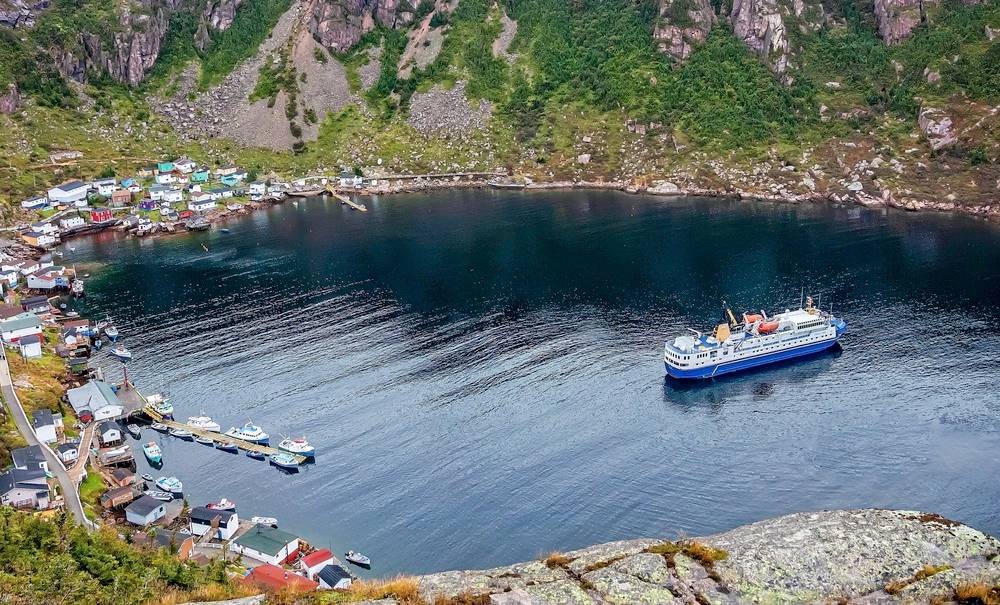
Ocean Nova

- 79Guests
- 1992Launched
- 73 mLength
All ship facts
- Crew
- 32
- Speed
- 13 kts
- Width
- 11 m
- Currency on board
- USD
- Language
- en